
AI is not just for large corporations. Optimise your production, secure quality through optical inspection and avoid unplanned downtime – scalable, pragmatic and integrated directly into your shopfloor processes.
Easy to implement, measurable success.
Automated optical quality control detects scratches, cracks or assembly errors in milliseconds.
Real-time analysis of overall equipment effectiveness and automatic identification of bottlenecks.
Preserve the experience of your top experts in a corporate LLM for new staff.
AI-controlled spare-parts stocking and scheduling based on wear forecasts.
Typical bottlenecks that AI measurably improves.
A machine failure can cost a great deal per hour. Reactive maintenance is expensive and risky. Sensor data often sits unused in data silos.
Human inspectors tire, miss micro-defects and can only do spot checks. With zero-defect requirements that is a systematic risk.
Experienced machine operators retire, the next generation is missing. The know-how is in people's heads, not in systems.
PLC, MES, ERP – the systems collect terabytes. But no one analyses them systematically. Optimisation potential stays hidden.
We make your innovation visible – for customers and new talent.
Every production line generates data – vibration, temperature, cycle times, images. AI turns this raw data into concrete optimisations: detect errors before they happen. Plan maintenance before the machine stops. Secure quality without manual effort. In the strategy workshop we analyse your manufacturing processes and identify the most effective AI levers.
3 hours • on-site on the shop floor or remote • incl. preparation and a results document
A concrete implementation plan for AI in your production: which use cases deliver the highest ROI, which data is available, what the delivery costs and how quickly it pays off.
Answers for production managers and managing directors.
No. For industry we offer edge-AI solutions that run on-premise and need no outbound data connection.
Often yes. Through retrofitting with inexpensive sensors, "analogue" machines can also be made AI-capable.
In quality control in particular, the investment often pays off within months through reduced scrap. In the initial consultation we calculate transparently for your case.
Cameras capture products on the line. AI analyses in real time for errors, scratches, dimensional deviations. Faulty parts are automatically rejected. The system learns continuously and becomes more precise.
Yes, predictive maintenance. Sensors monitor vibration, temperature, power consumption. AI detects anomalies and warns of failures – often weeks in advance. That minimises unplanned downtime.
We integrate AI solutions into common systems such as SAP, Microsoft Dynamics, PROXIA or others. Via interfaces, production data can be synced and processes automated.
No. We develop the solution, train the models and hand over a ready-to-use system. Your team operates it via simple dashboards – no programming skills needed.
For quality control: 500-1,000 images per defect type. For predictive maintenance: 3-6 months of sensor data. We often start with pre-trained models and refine them with your data.
The cost depends on scope. With reduced scrap, the investment pays off quickly. In the initial consultation we calculate transparently.
A pilot (e.g. quality control on one line) is productive in 8-12 weeks. Scaling to further lines is then faster. We always start with a manageable proof of concept.


"Data is the new oil, but only AI is the refinery that draws real value from it."
Markus Kirchmair advises manufacturing companies on the step towards the smart factory. His focus is on deploying AI pragmatically where it brings immediate relief in the skills shortage and measurable quality benefits.
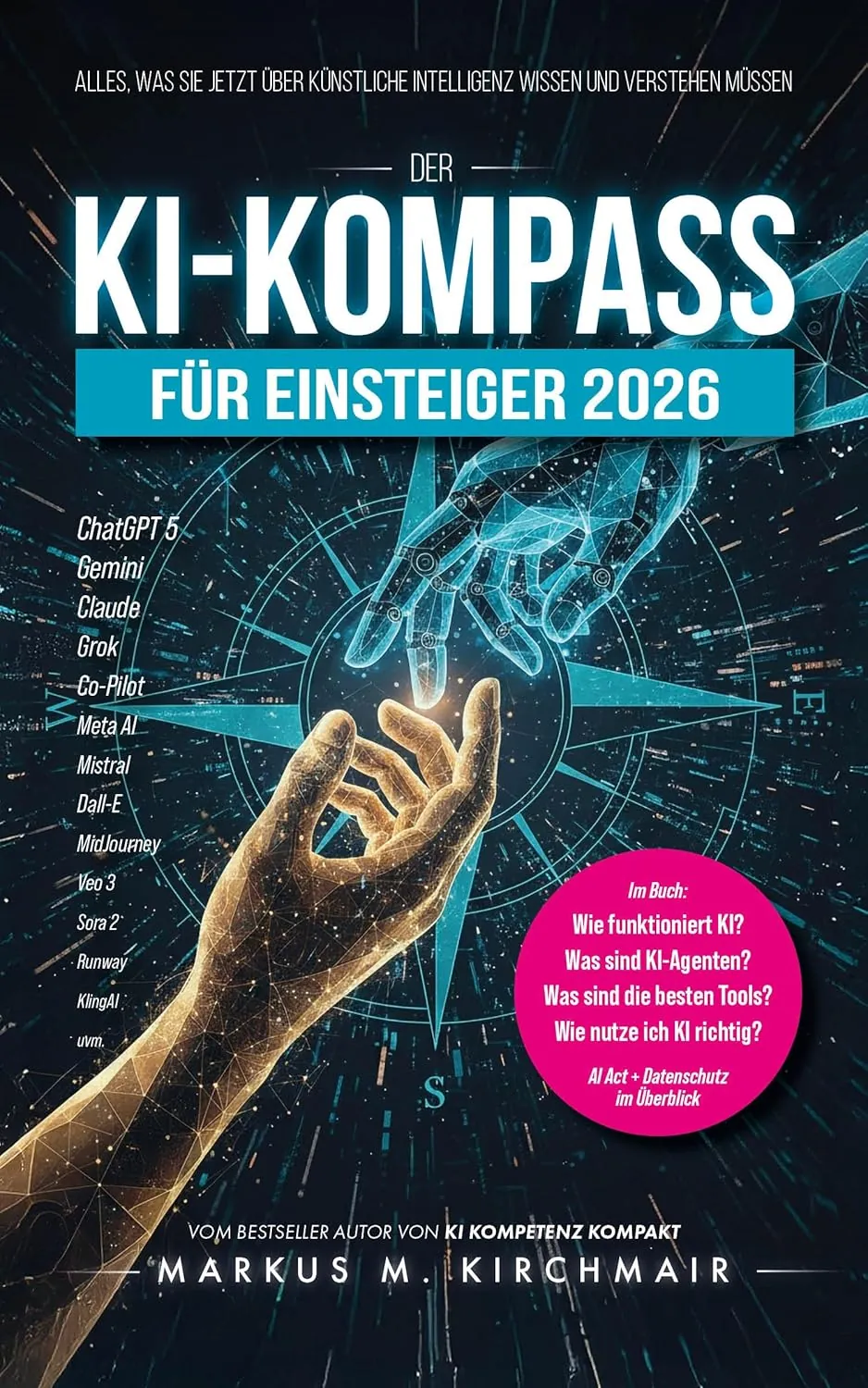
AI fundamentals, tools and regulation explained clearly.
Order now on AmazonLet's find out together where AI offers the biggest lever in your production – from predictive maintenance and quality control to process optimisation.