

The skills shortage hits IT hardest. AI is your new junior developer who never sleeps. Integrate copilots into your IDEs, automate first-level support and generate documentation at the push of a button. For system houses, SaaS startups and managed service providers.
Tools developers love, because they remove the grind.
AI writes tests, API wrappers and standard components. Your seniors focus on the architecture.
Mark code and let the AI find edge cases and write tests for them.
AI analyses incoming tickets, recognises urgency and assigns them to the right expert team.
Tech support gets solution suggestions based on similar resolved tickets from the past.
Helps new staff understand complex, old codebases faster ("onboarding buddy").
Supports migration from e.g. Java to Kotlin or PHP to Node.js through automated translation.
Four bottlenecks that cost billable hours.
Open positions stay unfilled for months. Existing teams are overloaded. Every hour spent on boilerplate code is missing for architecture.
"Forgot password", "printer not working" – a large share of first-level tickets are routine. Technicians spend more time on triage than on solutions.
Wikis from 2019, undocumented APIs, knowledge in heads instead of systems. Onboarding new developers takes months.
Spaghetti code from 2015 that no one dares touch. Migration is expensive and risky. New features are built around the legacy.
Many IT service providers hesitate over data security. We have the solutions.
Writing boilerplate, triaging tickets, maintaining docs – IT teams spend too much time on routine. AI can automate code completion, resolve support tickets and explain legacy code. In the strategy workshop we analyse your dev and ops workflow and identify the most effective AI levers.
3 hours • on-site or remote • incl. preparation and a results document
A concrete implementation plan: which AI tools boost your team's productivity the most, how to integrate them securely, and when the licence costs pay off.
Answers for CTOs and IT leads.
It depends on the configuration. With business tiers of leading coding assistants or locally hosted open models, the data stays with you. We set this up securely.
No, but the learning curve gets steeper. Juniors become productive faster but need more guidance on code review, since AI can also produce "plausible nonsense".
Absolutely. We help you add AI services (e.g. chatbots, RAG systems) to your portfolio as a managed service.
As you type, the AI suggests code completions – from single lines to entire functions. You accept with Tab or ignore them. That dramatically speeds up routine code.
Yes. You write a function, AI generates matching unit tests. That increases test coverage and saves time. Importantly: tests still have to be reviewed.
AI analyses incoming tickets, categorises them by priority and topic, suggests solutions from the knowledge base. Complex tickets are forwarded to specialists.
We integrate AI into common systems such as Jira, Zendesk, Freshdesk or others. Via APIs, workflows can be automated.
Yes. You mark complex code, AI explains what it does, why it was written that way and suggests refactoring options. That dramatically speeds up onboarding of new developers.
Very secure. Open language models run entirely on your infrastructure. No data leaves your network. We help with setup and fine-tuning.
From code assistants and local LLMs to full dev-pipeline automation — the cost varies by setup. With developer hours saved each month, the investment pays off quickly. In the initial consultation we calculate transparently.


"I worked for years as a full-stack developer and project manager myself. I know: developers hate marketing fluff, they want tools that work."
Markus Kirchmair combines deep technical understanding with business strategy. He speaks the language of your developers and that of your leadership.
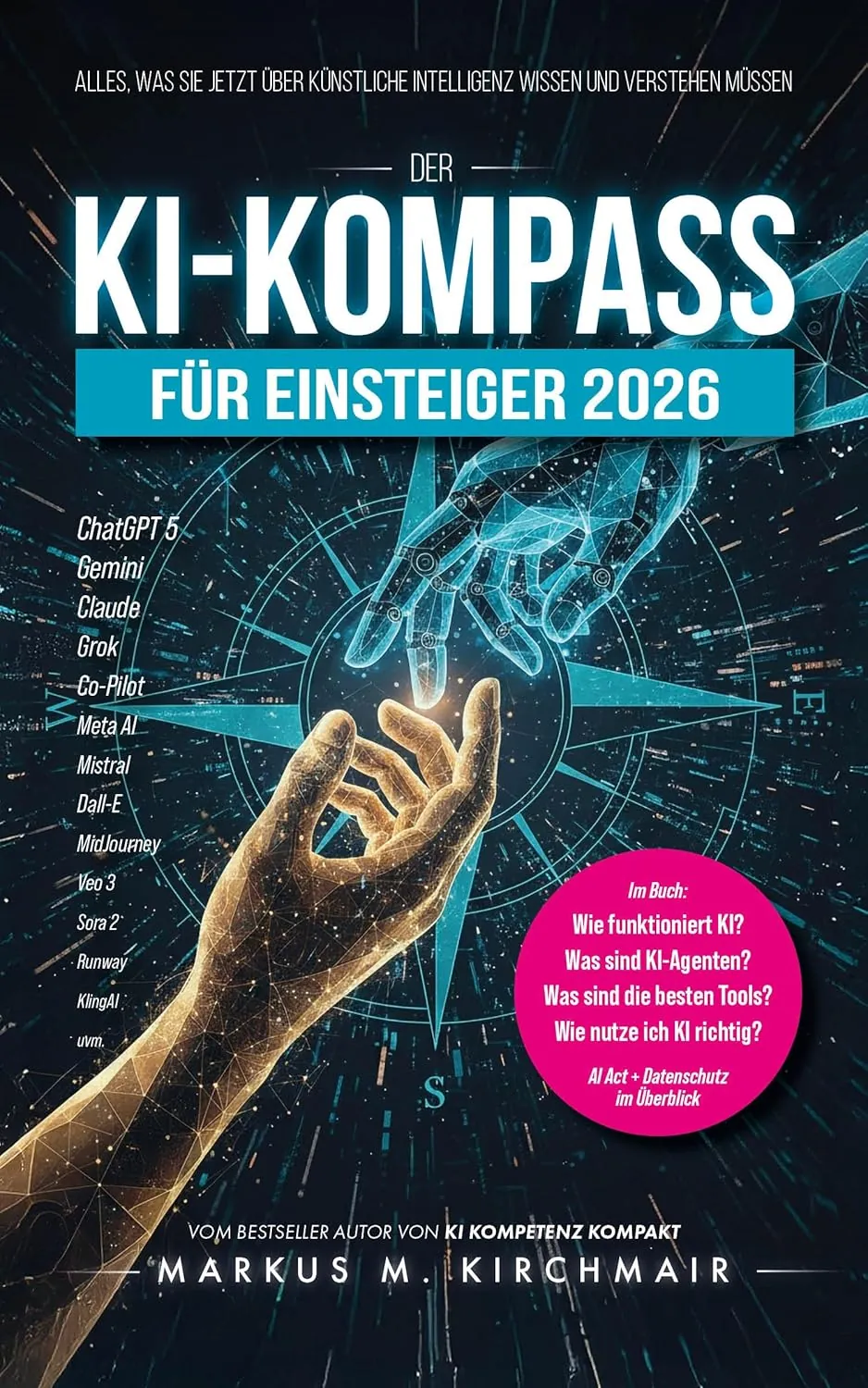
AI fundamentals, tools and regulation explained clearly.
Order now on AmazonLet's find out how AI can make your developers more productive, automate your support and open up new revenue streams.